

I published the following article on 18 March 2026 on my website, but I've decided to share it on my Substack.
David Hughes has been on my podcast a few times and I’ve generally enjoyed his work. Back in mid-2025, for example, on my UK Column podcast, he chatted to me about psychological warfare and how to best understand it.
Then, out of nowhere, a few weeks ago, he wrote a bizarre article in which he ‘outlined three camps of awareness’ and questioned my independence—hinting that I might be controlled opposition.
I don’t like public spats, and I don’t consider this one to be such—since I’m critiquing his article only because he mentioned me, UK Column, and several excellent thinkers who, like David, have appeared on my podcast.
My confusion about his article—what it’s trying to achieve or what his end goal might be—is what has motivated me to write this.
Additionally, I invited him back onto my podcast to discuss all of this, but he declined—and out of respect for his privacy, I won’t divulge his reasons, whether valid or not, or what was said in our emails. Of course, the offer stands, should he change his mind.
His main argument
In short, his main argument is that resistance movements are often infiltrated through what he calls ‘Camp 2’ — a space that seems to oppose the mainstream but actually keeps real dissent under control.
The smart way to keep people passive and obedient is to strictly limit the spectrum of acceptable opinion, but allow very lively debate within that spectrum — even encourage the more critical and dissident views. That gives people the sense that there’s free thinking going on, while all the time the presuppositions of the system are being reinforced by the limits put on the range of the debate.
— Noam Chomsky
He points out that many alternative media figures push coordinated messages, often without clear funding sources, and that genuine pushback can be taken over by financial (and other) interests.
I certainly agree with him.
He adds that blindly following charismatic ‘leaders’ is a bad idea.
Again, I agree with him.
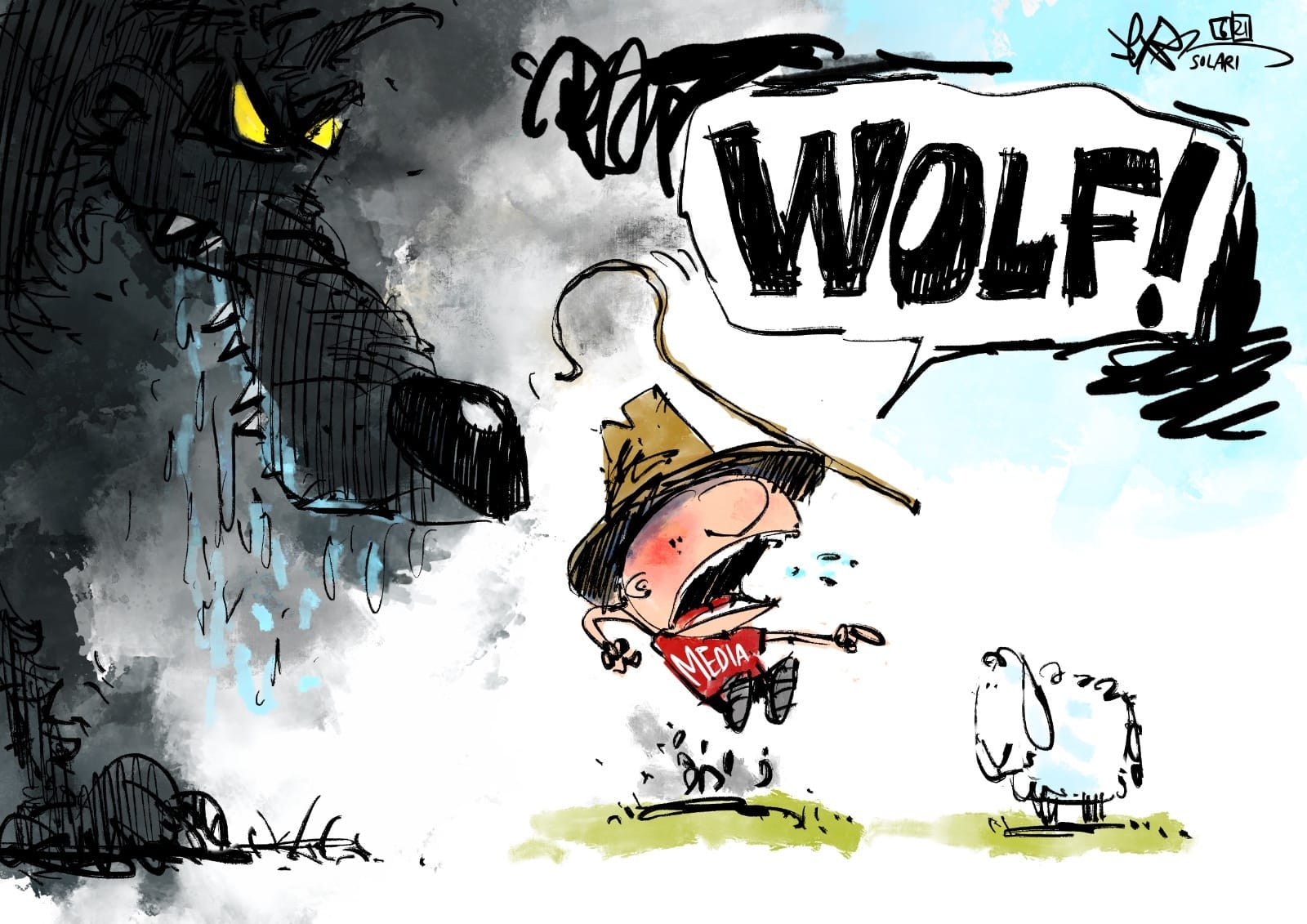
However, whilst David identifies real problems within alternative media, his proposed ‘three camps’ framework is a wolf in sheep’s clothing.
Not an original idea
David claims he’s ‘attempting to construct a detailed theoretical framework that no one has ever tried to construct before‘, but this isn’t true.
The ‘Third Camp’ concept dates back to the mid-20th century, particularly in socialist thought led by figures like Hal Draper. It was originally defined as ‘Neither Washington nor Moscow’, rejecting both Western capitalism and Soviet-style communism in favour of an independent socialist stance.
‘All warfare is based on deception.’
— Sun Tzu
Sun Tzu’s famous principle that ‘all warfare is based on deception’ underlines the strategic importance of misleading opponents. He advised that strength should be hidden by appearing weak, action disguised as inactivity, and closeness made to seem like distance. This approach is not just about trickery, but about shaping an opponent’s perceptions to gain advantage without direct conflict. The behaviour David describes as ‘Camp 2’ — where opposition groups serve a hidden agenda — closely mirrors the Art of War.
In other words, presenting a false front while advancing a concealed goal is a well-established strategy in warfare.
David is rehashing other people’s ideas and that’s perfectly fine, but his attempt is not unique.
It’s all so vague
David’s approach is keeping his criticisms deliberately vague whilst creating an impression of detailed analysis. He mentions loads of names—including mine—throughout his piece, but provides remarkably little evidence for, well, anything.
For instance, he’s suspicious of my paid trip to China in 2025, claiming my subsequent commentary was ‘scarcely differentiable from foreign propaganda’.
What?
I don’t think he actually listened to much of what I said, then.
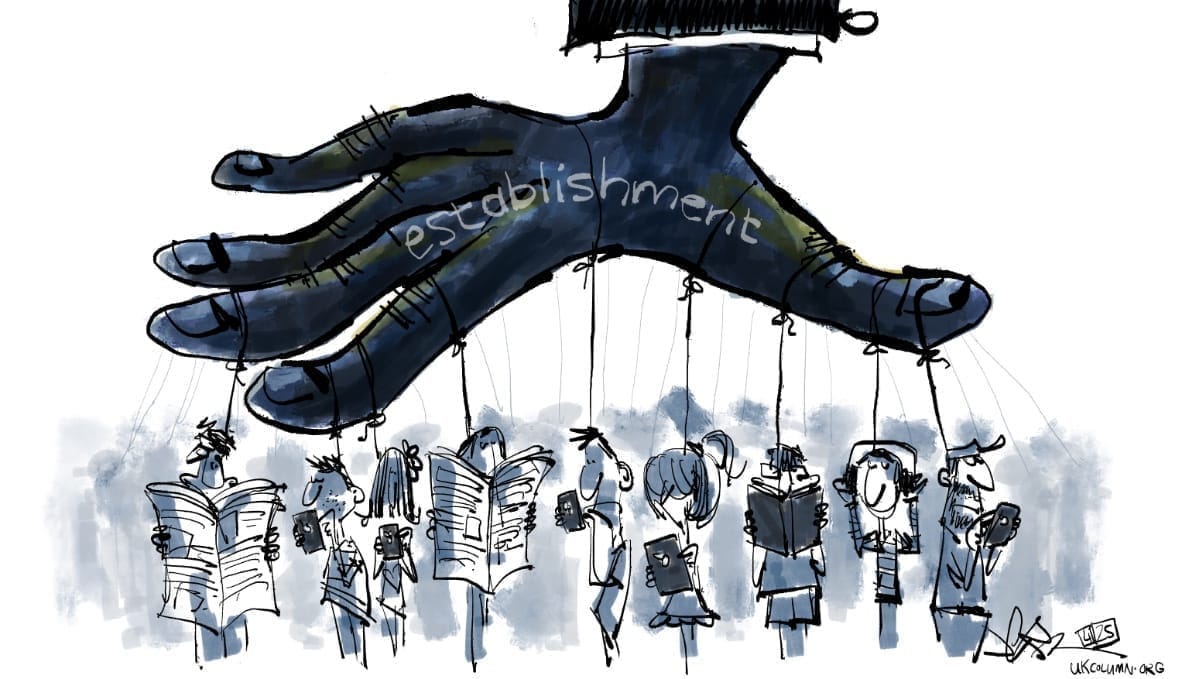
He ‘questions’ how Western journalists can maintain independence when reporting from countries like China and Russia—yet, as his writing clearly shows, he has fallen into the same Sinophobic trap they do. He has never been to China and is simply parroting the anti-China narrative he’s been programmed with.
I put ‘questions’ in quotation marks because David isn’t really questioning—he’s playing psychological games with his readers. He has my contact details but didn’t reach out to ask anything about my trip. Funny, that.
From his article:
All three commentators were willing to report favourably on China/Russia in ways that were scarcely differentiable from foreign propaganda, supposedly in the name of “getting beyond Western propaganda.
What’s wrong with reporting favourably?
Yet David himself took a paid trip to Spain courtesy of the Brownstone Institute, which he describes as perfectly innocent, claiming he ‘saw nothing untoward’ and experienced only ‘a free and open exchange of ideas’.
So, it’s okay to report favourably on Spain, but not on China?
Did you know that Jeffrey Tucker is the founder and president of the Brownstone Institute (who paid for David’s trip)? And did you know that Jeffrey works for the Epoch Times as their Senior Economics Columnist? And did you know that the Epoch Times is funded by heavily anti-China interests like alien-cult Falun Gong? And did you know that Mark Palmer, a co-founder of the National Endowment for Democracy (NED) and Vice Chairman of Freedom House (an organisation funded entirely by the US government), has funded both Epoch Times and Falun Gong? And did you know that the NED is connected to George Soros, whose Open Society Foundation in China was shut down in 1989 for its involvement in attempting to create CIA-backed political instability?
The double standard is breathtaking.
But, hey, like David, I’m just asking innocent questions, right? Why bother contacting David to ask about his paid trip to a NATO country, right?
By the way, Jeffrey has been on my podcast and is a great thinker. I’m merely adding some information that David omitted.
Oh, and I have nothing against Spain.
I’ll be absolutely clear
Our trip was planned months in advance.
I was part of a team creating content—available on my UK Column page—for Pepe Escobar’s upcoming book and documentary about the history of the Silk Road and Belt & Road Initiative, which is why we went into the desert and villages of Xinjiang.


I was given no editorial mandate and had the freedom to share my opinion—both good and bad—which I did (and still do).
The irony is that David’s approach—forming opinions without direct experience—is exactly the kind of armchair theorising that leads to the propaganda he claims to oppose.
South Africa is my home. I have no intention of emigrating to China, but I would love to bring some—though not all—of what I saw there back to my country.
Take safety: whatever the Chinese government has done over the last 30 years is incredible. Over the same period, South Africa has barely improved its safety levels. I live in one of the most violent countries in the world, comparable to a war zone.
Will I speak favourably about China’s remarkable improvement in safety?
Yes.
But I’ve also noted that the large number of cameras didn’t bother me too much, since I generally felt very safe and had no desire to steal anything from anyone. That said, I don’t like mass surveillance, and China has a lot of it.
Had David bothered to actually follow my commentary, he would have known this.
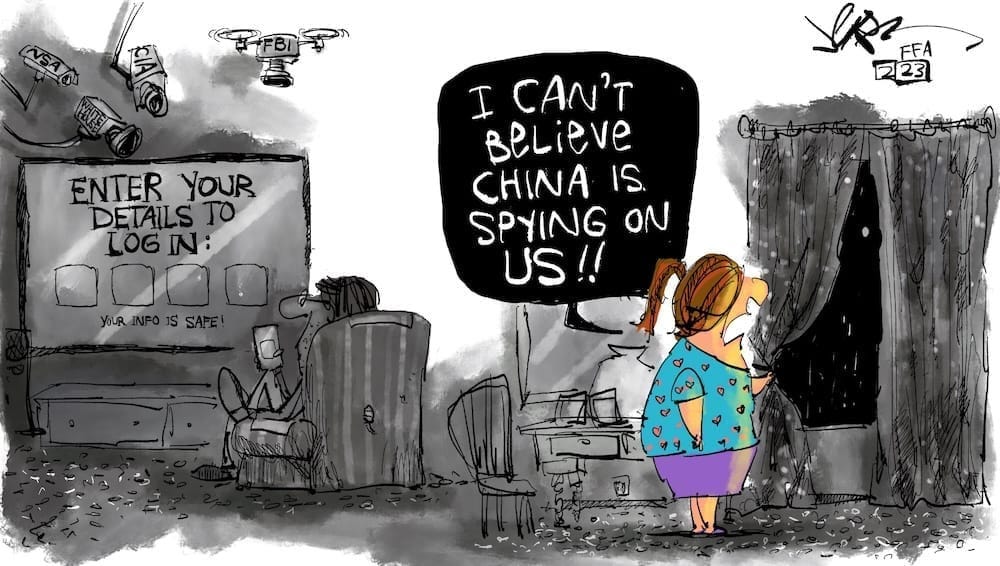
However, the US and Israel also have a lot of mass surveillance—and far more destructive than China’s. For example, Palantir’s mass surveillance technology was used in the US and Israeli attack on Iran in March 2026. And thousands of Starlink terminals were covertly used to trigger civil unrest in Iran, two months earlier.
From ZeroHedge:
The State Dept has been calling its ongoing purchases of Starlink terminals for Iran part of an ‘internet freedom’ initiative, but if the situation were reversed, Washington obviously wouldn’t stand for it. It is easy to imagine American outrage in the scenario where Iran was the one issuing communications equipment to anti-Trump protesters in the US on a mass scale, for example.
All signed and authorised by Trump, via Stargate.
The false trichotomy
David’s framework suffers from the same rigid binary thinking he claims to oppose.
By dividing humanity into three neat camps, he creates exactly the kind of false dichotomy he criticises in others. Reality is far messier, complex, and more nuanced than his schema suggests.
People don’t fit into tidy categories.
Someone might be genuinely sceptical about certain official narratives whilst accepting others. They might be partially correct about some issues whilst completely wrong about others. They might evolve their thinking over time, moving between different levels of awareness on different topics.
And why three camps?
Why not five? Or 100? Or 547?
David’s framework demands that we view everyone through his particular lens, forcing everyone into predetermined boxes. This reductionist approach mirrors the very propaganda techniques he claims to expose - it’s just another form of ‘us versus them’ thinking dressed up in sophisticated language and word salads.
To claim that there are ‘three camps of awareness’ is, in my opinion, both divisive and dangerous.
But it gets worse.
Monopolising truth
Perhaps most unsettling is the implicit claim to be the sole arbiter of authentic truth-seeking. By positioning himself as the enlightened observer who can identify the ‘real’ truth-seekers from the controlled opposition, David assumes a position of ultimate authority that should make any critical thinker deeply uncomfortable.
He presents his framework as objective analysis, but it’s actually a highly subjective interpretation that conveniently places him and those who agree with him in the virtuous ‘Camp 3’ whilst casting doubt on pretty much everyone else.
This is precisely the kind of monopolisation of truth that characterises cult-like thinking.
The very act of creating this framework serves to position David as a gatekeeper of authentic resistance—exactly the role he accuses others of playing. He becomes the ultimate insider who can reveal which outsiders are really insiders in disguise.
Consider his treatment of James Corbett, whom he acknowledges as 'undoubtedly a Camp 3 personality in other respects' but then questions because of James' association with Richard Gage.
David can’t simply accept that someone might disagree with his assessment. Instead, he speculates that James was ‘somehow reined in and told to toe the Camp 2 line’.
Does James (like me) not have agency over his own thoughts?
So, what this reveals is the unfalsifiable nature of David’s framework: anyone who doesn’t fully conform must, in his view, be compromised in some way.
Creating the division he opposes
David claims to oppose the fragmentation of resistance movements, yet his framework actively promotes exactly this fragmentation.
By encouraging people to view other dissidents with suspicion and to constantly police one other for signs of ‘Camp 2’ behaviour, he creates a paranoid atmosphere that destroys the trust necessary for effective collective action. Rather than building bridges between different strands of alternative media, his approach pushes for endless infighting and purity tests. It transforms allies into enemies and turns every disagreement into evidence of possible infiltration or control.
‘Bro, you think that 9/11 was controlled demolition and not directed energy weapons. Bro, that means you’re totally controlled opposition, bro.‘
This is particularly damaging because it mirrors classic Art of War divide-and-conquer tactics. Whether intentionally or not, David’s framework atomises the opposition and prevents coalition-building that might actually threaten the establishment.
Consider his strange attack on UK Column. Rather than engaging with the actual content or challenging specific ideas, he focuses on financial speculation and guilt by association.
Moreover, instead of creating some vague, overarching ‘mystery’ about my trip to China, why not simply point to something specific I’ve said or done?
What’s his end game?
My ultimate problem with David’s ‘three camps’ approach is that it makes effective resistance nearly impossible. If everyone is potentially controlled opposition, if every funding source is suspect, if every platform is compromised, then no meaningful action can ever be taken and no information war can be won.
David’s framework creates a paralysing paranoia that helps existing power structures far better than any controlled opposition could—precisely as Sun Tzu observed thousands of years ago.
Knowingly or not, David is encouraging people to retreat into isolated purity rather than engaging in nuance and complexity.
Conclusion
Whilst David raises legitimate concerns about controlled opposition, his camp framework creates the very divisions and paranoia that prevent effective resistance, whilst positioning him as the ultimate authority on who can be trusted.
Real resistance requires building coalitions, accepting imperfect allies, and focusing on concrete actions rather than endless purity tests and fragmentation of the opposition.
Do those who opposed the Covid jab have the same views as me on the existence of contagion? I have no idea, but I don’t care—what mattered at the time was pushing back against a toxic injection being forced on me and those around me.
We need intellectual humility rather than attempts to monopolise truth.
Most importantly, we must recognise that our enemy isn’t other dissidents who don’t share our exact worldview.
Our enemy is the actual power structures that oppress us.
I have not liked David A Hughes since the very first moment I spotted him on Substack.
"Who the fuck does this guy think he is?" I fumed and then some random subscriber PAID for me to have a subscription to his prolific new platform.
Gawd, the man was tedious. I was nodding off! Everyone was fawning over him and I was still thinking "Who the fuck does this guy think he is?".
When I saw the 3 Camps of Awareness exercise in generalising I had to click delete. Sorry, but there is no way I will be reading any more of his misdirection and what is more....
I don't trust anyone who is part of his team. Watch who he sucks up to.... its a shill swamp.
A few of us have changed our opinions on Dr David A. Hughes...
David A. Hughes Growing the Divide in the 9/11 Truth Community?
A discussion of Dr David A. Hughes and the 9/11 truth movement as a whole
Discussion: https://911revision.substack.com/p/david-a-hughes-growing-the-divide
No but, Dr David A. Hughes
A "three camps of awareness" framework & Identifying Camp 2
Article: https://911revision.substack.com/p/no-but-dr-david-a-hughes
Dr David A Hughes, Dr Judy Wood, 9/11, Energy, the Hutchison Effect and Hurricane Erin
Article by Andrew Johnson: https://www.checktheevidence.com/wordpress/2026/04/01/dr-david-a-hughes-dr-judy-wood-9-11-energy-the-hutchison-effect-and-hurricane-erin/
David Hughes on the importance of 9/11 revisionism and why evidence matters
A critical look at the three camps of 9/11 truth awareness
Interview: https://911revision.substack.com/p/david-hughes-on-the-importance-of